
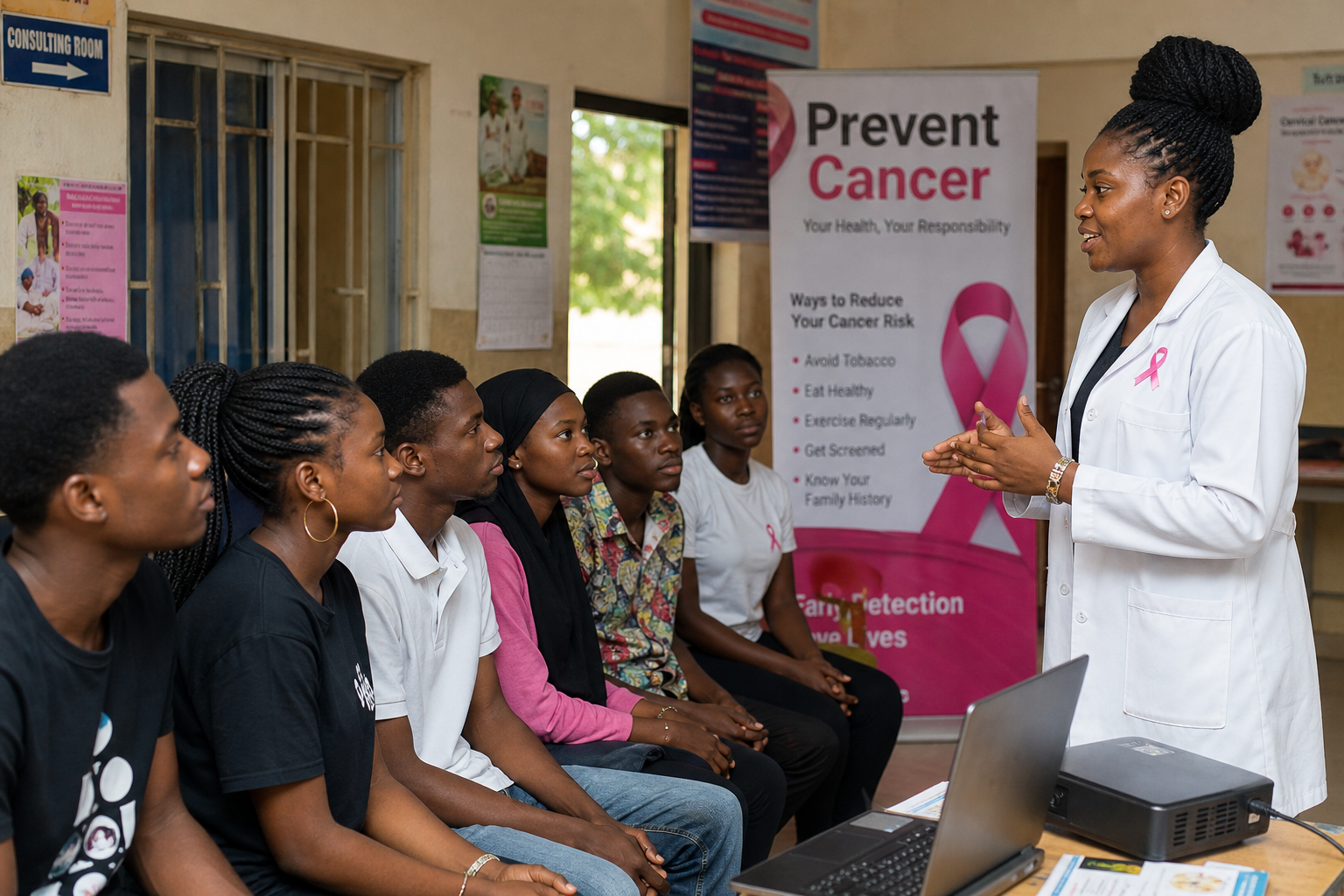
THE IMPACT OF CANCER PREVENTIVE KNOWLEDGE ON THE HEALTH OF YOUNG PEOPLE IN LAGOS STATE, NIGERIA
This paper investigates how much young people aged 15–49 in Lagos State, Nigeria know about cancer prevention and risk factors, and whether that knowledge influences their perceived health status. Cancer remains one of the leading causes of death globally, and recent trends show a rising incidence among individuals under 50 years — making this demographic a critical focus for public health intervention.
Using a cross-sectional survey of 375 respondents, the study found that while most participants knew that some cancers are preventable and recognized smoking and poor diet as major risk factors, significant gaps remained — particularly around alcohol as a risk factor, healthy dietary choices for cancer prevention, and practical strategies to reduce cancer risk. Notably, only 16.8% had ever participated in cancer screening, despite 88.5% expressing a strong desire to learn more about preventive measures.
This disconnect between awareness and action points to a deeper issue: knowing that cancer is preventable does not automatically translate into preventive behaviour. The study also found that age, education level, and employment status were significantly associated with the level of cancer preventive knowledge among participants. The study concludes that targeted cancer awareness programmes are urgently needed in Lagos, with emphasis on lifestyle modifications such as healthy eating, avoiding alcohol and tobacco, and regular screening. These programmes should leverage healthcare professionals — identified as the most trusted source of health information among respondents — to empower young people to make informed, proactive health decisions and ultimately reduce the growing burden of cancer in Nigeria.
Click on the Link Below to read the full article:
Categories
Tags
#Article
#Article #Ballsbridge #Socialmedia #marketing #business #lagos
#ballsbridge
#BehaviouralChange
#blog
#Brandawareness
#business
#BusinessMistakes #LogisticsErrors #CLMIEducation #FixYourProcess #NaijaSMEs
#cancer
#clmi
#clmi2025
#CLMIEducation
#coaching
#collaboration
#conference
#courier
#culture
#december
#Ecologicalrisks
#ecommerce
#employee
#entrepreneurship
#FacilityModernization
#finance
#GovernanceAndGrowth
#governmentpolicy
#humanresource
#investiture
#LeadershipStartsWithYou
#Logistics
#management
#ManagementEnforcement
#marketing
#motivation
#NBCC
#Networking
#news
#Nigeria
#pharmaceutical
#PPECompliance
#ProfessionalGrowth
#profitability
#publichealth
#RiskPerception
#TimeManagement #ProductivityHacks #CLMIEducation #WorkLifeBalance #CareerSuccess #EfficiencyMatters #LogisticsManagement
You May Also Like
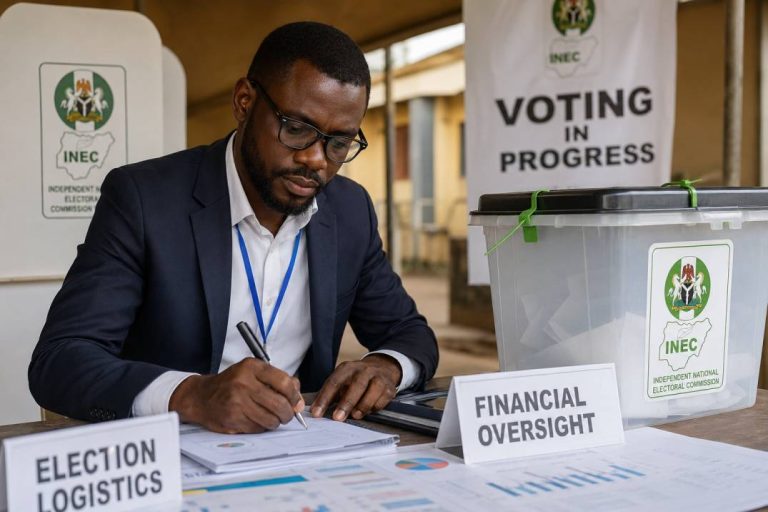
ABSTRACT The study examined how election logistics and financial oversight are associated with the inclusivity and transparency of elections in...
-
-
September 4, 2026
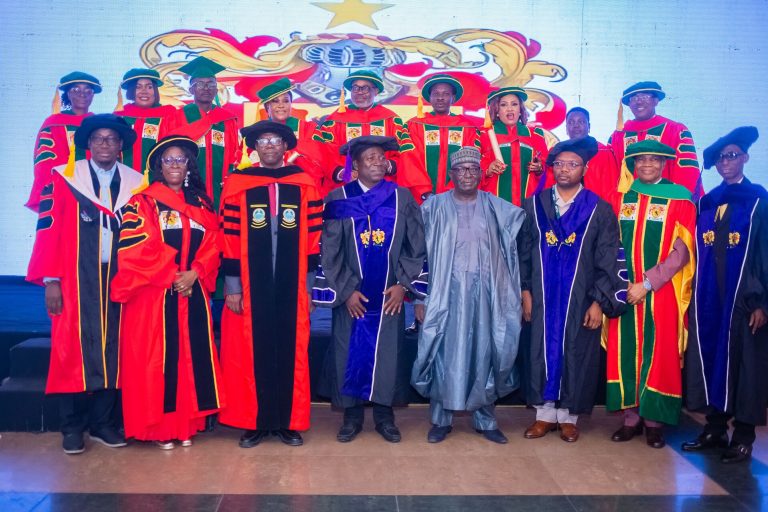
UNDERSTANDING BALLSBRIDGE UNIVERSITY Legal Status, Global Recognition & Academic Standards In Affiliation with the Courier and Logistics Management Institute (CLMI)...
-
-
August 12, 2026
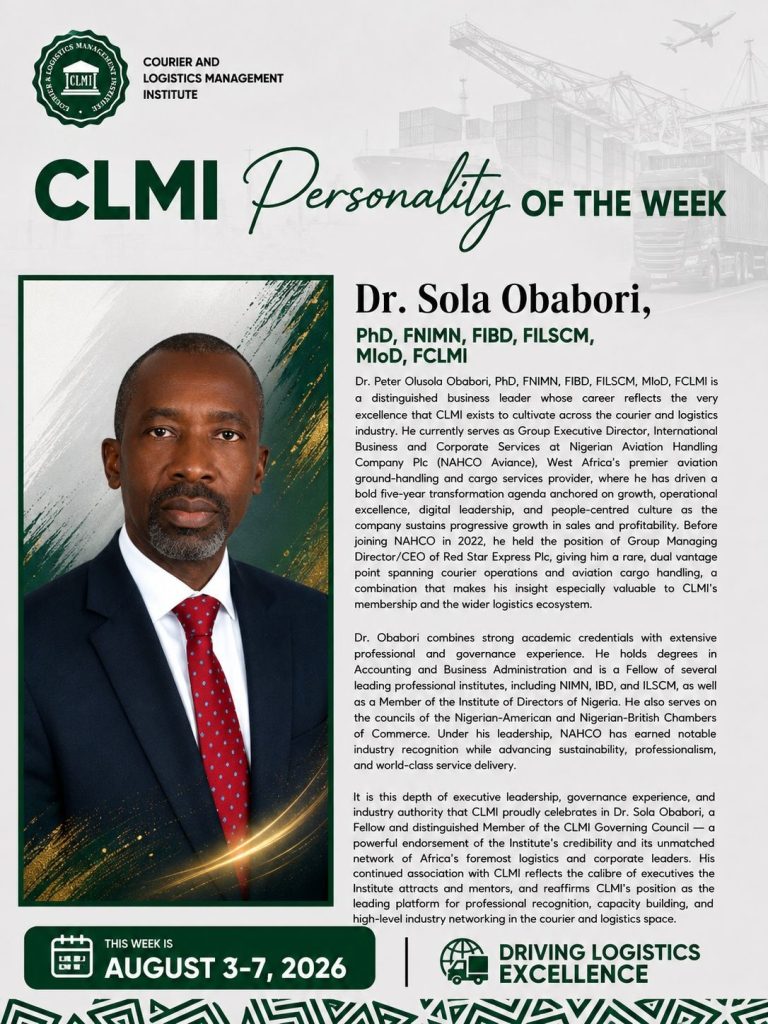
This week, the Courier and Logistics Management Institute (CLMI) proudly celebrates Dr. Peter Olusola (Sola) Obabori, PhD, FNIMN, FIBD, FILSCM,...
-
-
August 7, 2026