
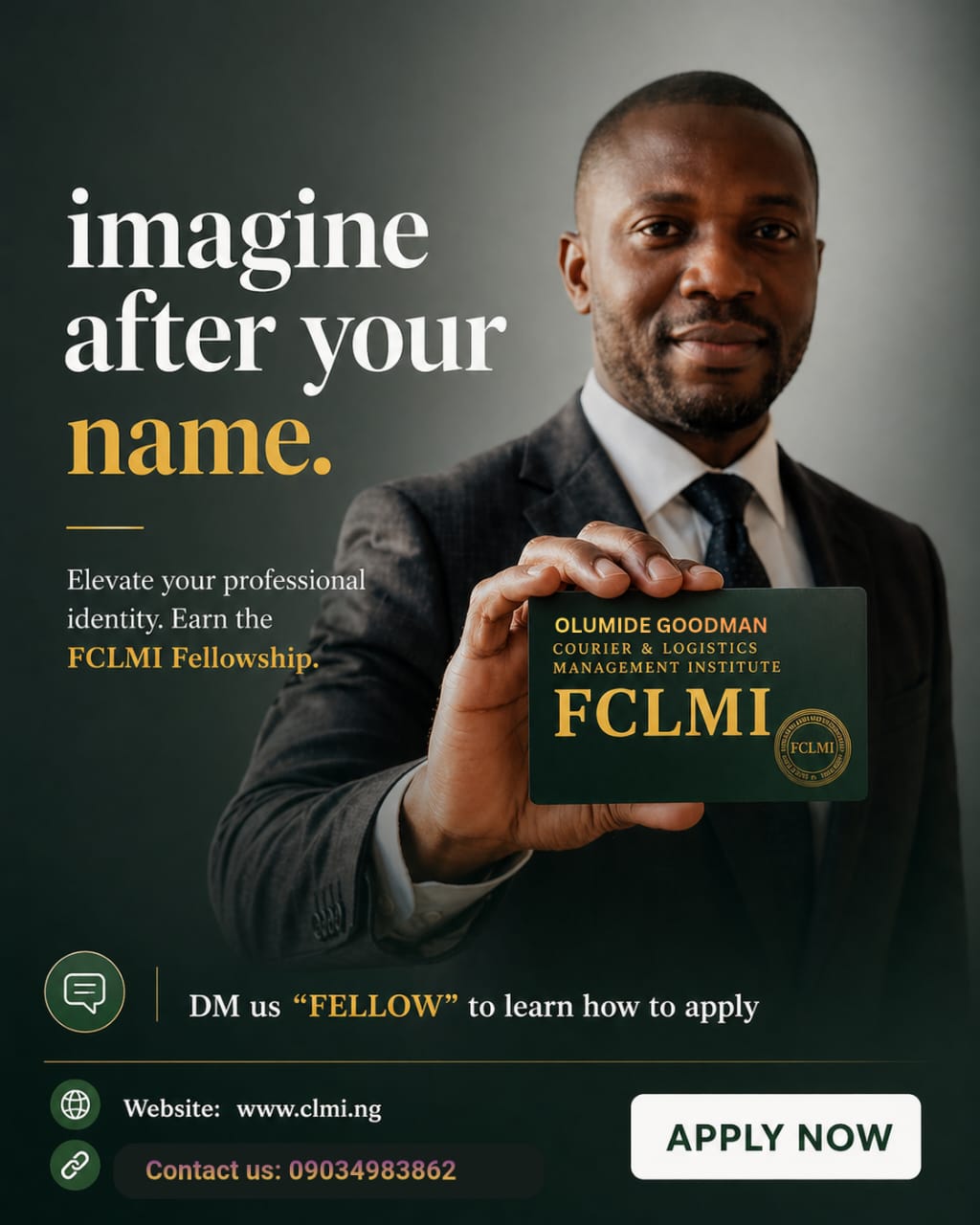
How Did You Learn What You Know?
Close your eyes for a second. Picture your name on a certificate, a business card, a LinkedIn profile, followed by three letters that tell the world exactly who you are: FCLMI. Fellow of the Courier & Logistics Management Institute.
That’s not just a title. It’s a declaration that you have reached the highest tier of professional recognition in your field. That your knowledge, your experience, and your commitment to your industry have been formally acknowledged at the very top.
Most of us didn’t walk a straight path to where we are today.
The pharmacist learned in a dispensary at odd hours, cross-checking drug interactions while managing anxious patients and navigating the fine line between protocol and human urgency.
The banker learned behind a counter, then a desk, then a boardroom, navigating regulations, managing risk, and building trust with clients who had everything to lose.
The engineer learned on construction sites and in design rooms, in the gap between what the blueprint said and what the ground actually allowed.
The doctor learned through years of residency, night shifts, and split-second decisions that textbooks could only partially prepare them for.
The teacher and academic learned through decades of shaping minds, adapting curricula, and staying ahead of a world that keeps changing faster than classrooms can keep up with.
The IT and technology professional learned through failed systems, late-night debugging sessions, and building solutions to problems that didn’t yet have names when they started their careers.
The lawyer learned through briefs, courtrooms, boardroom negotiations, and the quiet mastery of knowing when the law says one thing and justice requires something else entirely.
The accountant learned through audits, balance sheets, tax seasons, and the immense pressure of being the person everyone depends on when the numbers have to be right.
The marketing and communications professional learned through campaigns that worked, campaigns that didn’t, shifting algorithms, evolving consumer behaviour, and the constant art of making people care.
The human resources professional learned through the complexity of people, hiring, developing, managing conflict, building cultures, and holding organisations together from the inside.
The logistics and supply chain professional learned at 6:am in a warehouse, dispatching drivers, solving last-mile crises, and navigating the chaos of cross-border trade that most people never see.
The procurement and purchasing professional learned through vendor negotiations, supply disruptions, cost pressures, and the discipline of keeping operations running when the world throws its worst at the supply chain.
The project manager learned through missed deadlines, scope creep, stakeholder pressure, and the relentless work of bringing complex initiatives to a successful finish line against the odds.
The healthcare administrator learned through managing hospitals, clinics, and health systems, balancing patient care quality with operational and financial realities that rarely make the news.
The real estate and property professional learned through markets, mandates, valuations, and the very human business of connecting people with places they will call home or build their businesses in.
The insurance professional learned through risk assessments, policy structures, claims management, and the critical work of protecting individuals and organisations from financial catastrophe.
The agriculture and agribusiness professional learned through seasons, soil, supply chains, and the complex business of feeding nations while managing everything from weather risk to export regulations.
The maritime and aviation professional learned through ports, terminals, cargo manifests, and the intricate logistics of moving goods and people across oceans and skies.
The oil and gas professional learned through rigs, refineries, pipelines, and the high-stakes environment where technical precision and safety are never negotiable.
The public administrator and civil servant learned through policy, bureaucracy, community needs, and the daily challenge of delivering services to citizens with limited resources and unlimited expectations.
We all learned through sweat. Through long hours and short margins. Through mentors who never called themselves mentors, through mistakes that cost us, and through wins that people outside our industries never fully understood.
Somewhere along that journey, something shifted. The work stopped being just a job. It became a craft. A calling. A profession you were genuinely proud to be part of.
But here is the question that very few professionals, in any industry, ever stop to ask:
Has your professional standing kept pace with your expertise?
Because experience without formal recognition has a ceiling. And in today’s competitive, credential-driven world, that ceiling is getting lower every year.
“Credentials are no longer a bonus, they are the price of entry into the next level of any serious industry.”
The Professional Credentialing Gap Nobody Talks About
Across every sector, healthcare, finance, engineering, supply chain, technology, law, education, agriculture, real estate, and beyond, there is a widening gap between what professionals know and what they can prove they know.
A pharmaceutical professional with fifteen years in drug distribution may be more knowledgeable than a recently certified peer, but without formal recognition, that expertise is invisible on paper.
A banker who has spent a decade structuring trade finance deals across African markets carries institutional knowledge that textbooks don’t teach, but without credentials, it doesn’t travel.
An engineer who has delivered complex infrastructure projects under budget and ahead of schedule has real-world mastery that is genuinely rare, but mastery that isn’t certified is mastery that gets overlooked.
A teacher who has shaped hundreds of students across twenty years of classroom excellence holds transformative expertise, but without formal professional standing, that impact goes unrecognised beyond the schools they served.
A logistics professional who has built and managed courier networks, navigated last-mile delivery across challenging terrain, and moved goods across borders under impossible conditions has earned something extraordinary, and the world needs a way to recognise it.
This gap exists in every industry. And it costs professionals, real opportunities, real advancement, and real income, every single day.
This is the gap that professional fellowships and formal designations exist to close.
What Is the FCLMI Fellowship?
The FCLMI: Fellow of the Courier & Logistics Management Institute, is CLMI’s highest professional membership designation. It is awarded to professionals who have demonstrated exceptional expertise, sustained commitment to their field, and a track record of leadership within the industry.
But its relevance extends far beyond those with “logistics” in their job title.
If your work touches supply chain, distribution, pharmaceutical logistics, procurement, trade finance, infrastructure, healthcare administration, technology systems, agriculture, real estate, maritime, aviation, oil and gas, education, public service, or any domain where professional excellence and leadership matter, this fellowship speaks directly to you.
It is not simply handed out. It is earned. And that is precisely what makes it matter.
Why Professional Recognition Matters Across Every Industry
Whether you are in banking, engineering, healthcare, education, technology, or logistics, the principle is the same: professional recognition is the bridge between what you know and what the world is willing to trust you with.
For the pharmaceutical and healthcare professional, a recognised fellowship signals adherence to standards that protect lives, and opens doors in regulatory bodies, international health organisations, and multinational distribution networks.
For the banker and finance professional, a formal designation communicates discipline, ethical grounding, and technical mastery at a time when trust in financial institutions is more scrutinised than ever.
For the engineer and technical professional, it validates not just academic training but the applied, real-world problem-solving that separates good professionals from truly great ones.
For the educator and academic, it formalises a lifetime of intellectual contribution and positions them as a recognised leader in the scholarship and practice of their field.
For the IT and technology professional, it bridges the gap between technical skill and institutional credibility, increasingly important as organisations depend on technology leaders to make decisions that affect entire businesses.
For the legal and compliance professional, it adds a layer of formally recognised expertise to a field already built on qualification, distinguishing those who practice law from those who shape how it is understood and applied.
For the HR and people management professional, it validates the often underestimated expertise of managing the most complex asset in any organisation: human beings.
For the project manager, it formally recognises the discipline, methodology, and leadership required to deliver results in environments of constant uncertainty.
For the agriculture and agribusiness professional, it positions them as a credentialled leader in one of Africa’s most strategically vital sectors.
For the oil, gas, maritime, and aviation professional, it adds formal standing to an already technically demanding career, essential in industries where credentials directly influence contracts, safety clearances, and international partnerships.
For the logistics and supply chain professional, it marks you as elite in a sector rapidly becoming one of Africa’s most economically important industries.
In every case, the credential does something your CV alone cannot: it gives employers, clients, regulators, investors, and international partners an objective reason to trust you before they even meet you.
The African Professional in a Global Economy
Africa’s professional landscape is transforming at speed. Cross-border trade is expanding. Healthcare infrastructure is being restructured. Financial services are going digital. Engineering and construction pipelines are growing. Agricultural export markets are opening. Technology hubs are producing world-class talent. And global partners are paying closer, more critical attention to the professionals they choose to engage with on this continent.
In this environment, credentials are not just personal achievements; they are a competitive infrastructure.
The professionals who will lead Africa’s next chapter, across every sector, will not simply be the most experienced. They will be the most credentialled, the most formally recognised, and the most trusted. By institutions. By clients. The global partners are increasingly looking to collaborate here.
This is not a distant future. It is already happening.
The question is whether your professional recognition is keeping up with your expertise — and with the pace of the opportunity around you.
Who Is This For?
The FCLMI Fellowship is designed for seasoned professionals across all industries who are ready to formalise their standing at the highest level.
If you have:
- Invested years in developing genuine, hard-won expertise in your field
- Demonstrated leadership in an organisation, a team, a project, or the broader industry
- Maintained a commitment to professional standards and the growth of your sector
- And are ready to be formally and internationally recognised for it
This is your moment.
Your years in pharmaceutical distribution. Your decade in trade finance. Your career in infrastructure and engineering. Your time in classrooms shaping future leaders. Your work building technology systems. Your seasons in agribusiness. Your service in public administration. Your expertise in real estate, insurance, maritime, or oil and gas.
All of it counts. All of it matters. And all of it deserves to be formally recognised.
How to Apply
Getting started is straightforward.
📲 Send a DM with the word “FELLOW” to the CLMI Institute Instagram page
🌐 Visit www.clmi.ng for full details on eligibility, the application process, and what the fellowship entails
📞 Call or WhatsApp: 09034983862 for direct membership processing and enquiries
Our team will guide you through every step from application to award.
The bar is high because the title is worth it.
Now tell us: How did YOU learn what you know in your profession?
Drop it in the comments. Because most people’s answers will shock you. 👆
And if you know a professional in any field who deserves this recognition, tag them below. They need to see this.
#CapacityBuilding #ProfessionalGrowth #CareerAdvancement #FCLMI #CLMI #ProfessionalRecognition #LeadershipExcellence
Categories
Tags
#Article
#Article #Ballsbridge #Socialmedia #marketing #business #lagos
#ballsbridge
#BehaviouralChange
#blog
#Brandawareness
#business
#BusinessMistakes #LogisticsErrors #CLMIEducation #FixYourProcess #NaijaSMEs
#cancer
#clmi
#clmi2025
#CLMIEducation
#coaching
#collaboration
#conference
#courier
#culture
#december
#Ecologicalrisks
#ecommerce
#employee
#entrepreneurship
#FacilityModernization
#finance
#GovernanceAndGrowth
#governmentpolicy
#humanresource
#investiture
#LeadershipStartsWithYou
#Logistics
#management
#ManagementEnforcement
#marketing
#motivation
#NBCC
#Networking
#news
#Nigeria
#pharmaceutical
#PPECompliance
#ProfessionalGrowth
#profitability
#publichealth
#RiskPerception
#TimeManagement #ProductivityHacks #CLMIEducation #WorkLifeBalance #CareerSuccess #EfficiencyMatters #LogisticsManagement
You May Also Like
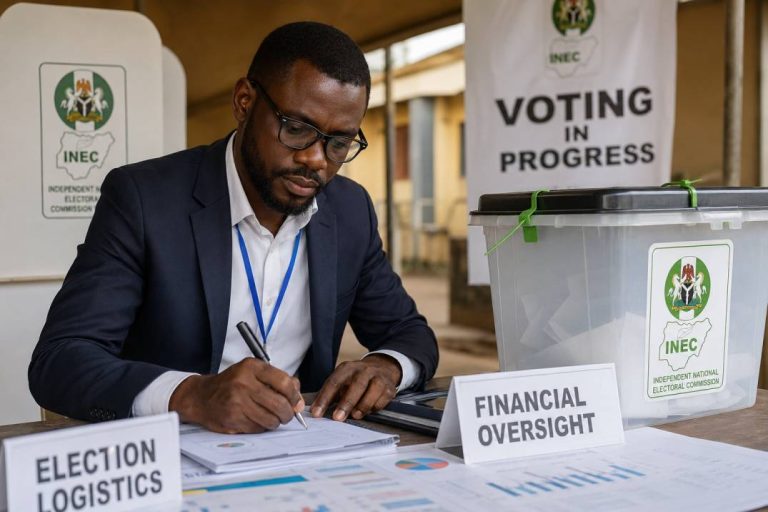
ABSTRACT The study examined how election logistics and financial oversight are associated with the inclusivity and transparency of elections in...
-
-
September 4, 2026
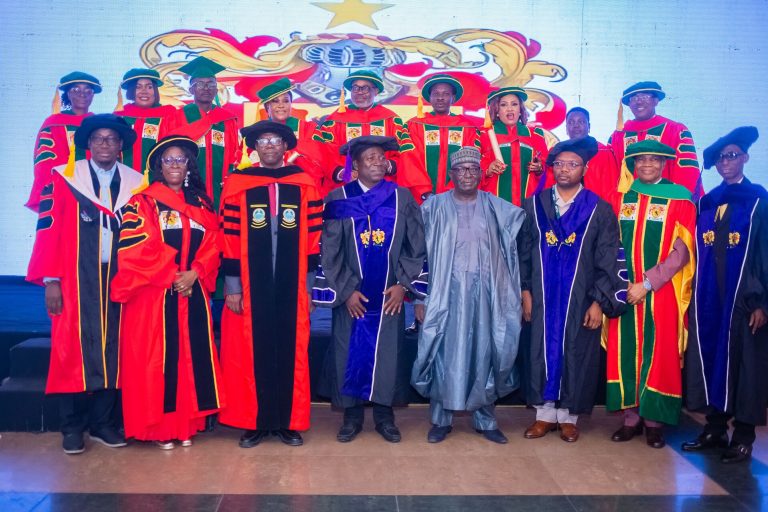
UNDERSTANDING BALLSBRIDGE UNIVERSITY Legal Status, Global Recognition & Academic Standards In Affiliation with the Courier and Logistics Management Institute (CLMI)...
-
-
August 12, 2026
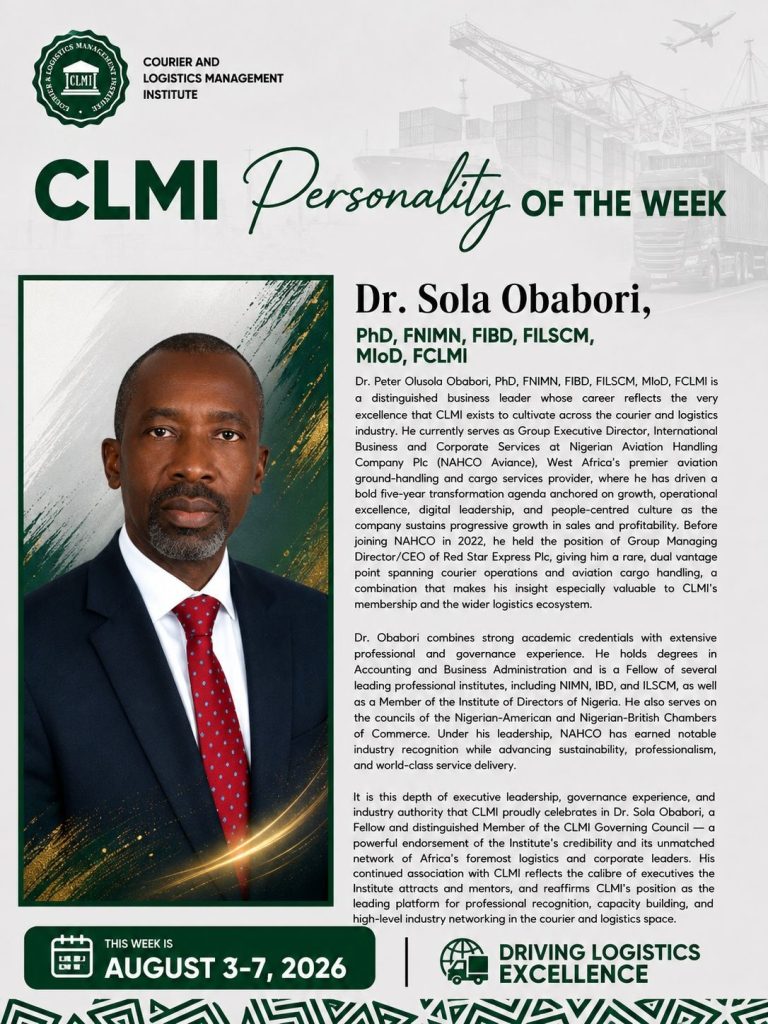
This week, the Courier and Logistics Management Institute (CLMI) proudly celebrates Dr. Peter Olusola (Sola) Obabori, PhD, FNIMN, FIBD, FILSCM,...
-
-
August 7, 2026