
Digital Commerce as a Strategic Imperative for Logistics and Business Leaders
In today’s global economy, commerce is no longer driven solely by products or price. It is driven by systems, speed, data, and customer experience. The rapid rise of digital platforms has fundamentally reshaped how value is created, delivered, and sustained across supply chains.
For logistics professionals and business leaders, digital commerce is not a trend to observe. It is a strategic imperative that determines competitiveness, scalability, and long-term relevance.
Commerce Has Shifted From Operations to Strategy
Historically, logistics functioned primarily as a back-end operational activity. Today, it has become a front-line strategic asset. Digital commerce now dictates how organizations:
- Capture and process demand
- Coordinate suppliers and fulfilment partners
- Optimize last-mile delivery
- Deliver consistent and transparent customer experiences
In this new environment, logistics performance directly influences brand perception, customer retention, and revenue growth. Businesses that align their logistics capabilities with digital commerce strategies gain a decisive advantage in the market.
Digital Commerce as a Competitive Advantage
Digital commerce enables organizations to move from reactive operations to predictive and data-driven decision-making. Through integrated digital systems, businesses gain visibility across the entire value chain, allowing leaders to anticipate demand, manage risks, and allocate resources more efficiently.
- Strategically deployed, digital commerce delivers:
- End-to-end supply chain visibility for informed decision-making
- Faster market response through automated order processing
- Scalable e-commerce fulfilment models
- Seamless last-mile integration aligned with customer expectations
- Technology-enabled customer experience as a differentiator
These capabilities allow organizations not only to compete on efficiency but also to compete on experience, reliability, and trust.
The Cost of Strategic Inaction
Organizations that delay digital adoption face more than operational inefficiencies. They face strategic erosion. Without digital commerce capabilities, businesses struggle to scale, lose relevance in competitive markets, and become vulnerable to digitally mature competitors.
As we move toward 2026, the market will increasingly favor organizations that have embedded digital commerce into their core strategy. Those that treat it as an optional add-on risk being outpaced by faster, more agile, and more customer-centric competitors.
Developing Strategic Digital Commerce Capability
Understanding this shift, the Courier and Logistics Management Institute (CLMI) has designed the Digital Commerce Course as a strategic capacity-building program rather than a purely technical training.
The course equips professionals and decision-makers with the strategic insight to:
- Understand and evaluate digital trade systems
- Design efficient e-commerce fulfilment strategies
- Integrate last-mile delivery into broader business models
- Leverage technology to enhance customer experience and loyalty
- Participants gain the ability to align digital commerce tools with organizational goals, market positioning, and growth plans.
Preparing for the Future of Trade and Logistics
The future of logistics will be defined by organizations that can combine technology, strategy, and execution. Digital commerce sits at the intersection of these three pillars. Investing in digital competence today is an investment in resilience, scalability, and sustainable growth.
The CLMI Digital Commerce Course is available in online and physical formats, offering flexibility for professionals and organizations. A certificate is issued upon completion, affirming participants’ readiness to operate and lead in digitally enabled commerce environments.
At CLMI, our focus is not just on training for today, but on building strategic leaders for tomorrow’s logistics and business landscape.
Digital commerce is no longer a support function. It is a strategic driver. The organizations that understand this will define the future of trade.
#DigitalCommerce
#StrategicLogistics
#SupplyChainLeadership
#BusinessTransformation
#CLMI
Categories
Tags
#Article
#Article #Ballsbridge #Socialmedia #marketing #business #lagos
#ballsbridge
#BehaviouralChange
#blog
#Brandawareness
#business
#BusinessMistakes #LogisticsErrors #CLMIEducation #FixYourProcess #NaijaSMEs
#cancer
#clmi
#clmi2025
#CLMIEducation
#coaching
#collaboration
#conference
#courier
#culture
#december
#Ecologicalrisks
#ecommerce
#employee
#entrepreneurship
#FacilityModernization
#finance
#GovernanceAndGrowth
#governmentpolicy
#humanresource
#investiture
#LeadershipStartsWithYou
#Logistics
#management
#ManagementEnforcement
#marketing
#motivation
#NBCC
#Networking
#news
#Nigeria
#pharmaceutical
#PPECompliance
#ProfessionalGrowth
#profitability
#publichealth
#RiskPerception
#TimeManagement #ProductivityHacks #CLMIEducation #WorkLifeBalance #CareerSuccess #EfficiencyMatters #LogisticsManagement
You May Also Like

ABSTRACT The study examined how election logistics and financial oversight are associated with the inclusivity and transparency of elections in...
-
-
September 4, 2026

UNDERSTANDING BALLSBRIDGE UNIVERSITY Legal Status, Global Recognition & Academic Standards In Affiliation with the Courier and Logistics Management Institute (CLMI)...
-
-
August 12, 2026
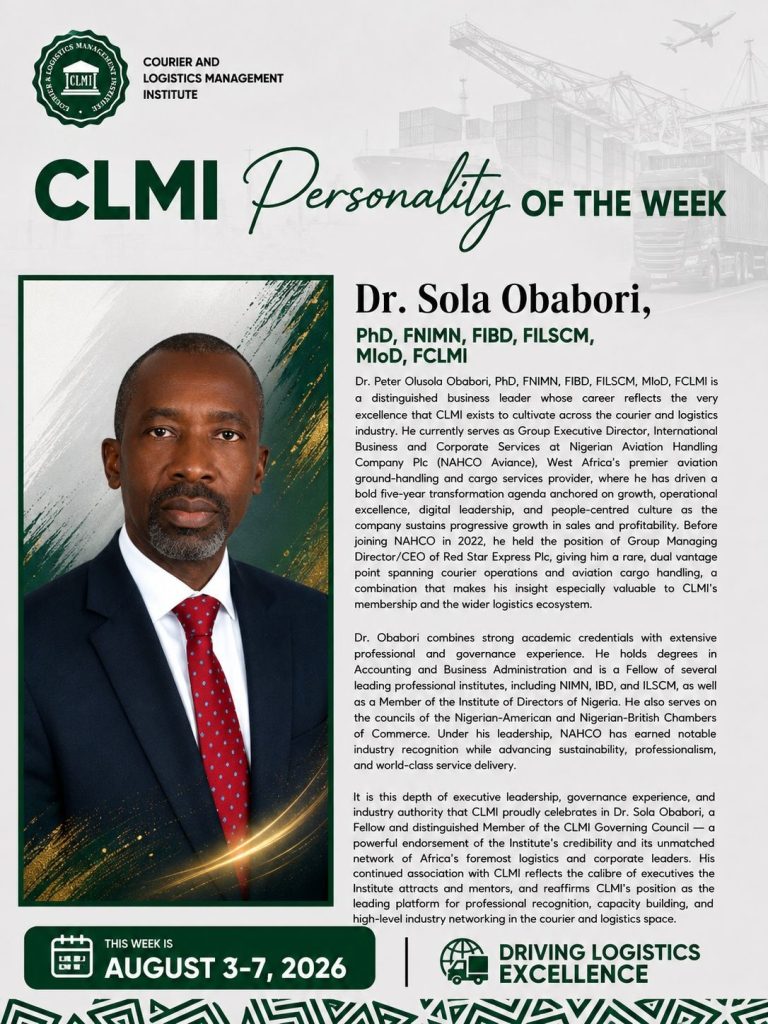
This week, the Courier and Logistics Management Institute (CLMI) proudly celebrates Dr. Peter Olusola (Sola) Obabori, PhD, FNIMN, FIBD, FILSCM,...
-
-
August 7, 2026